How to Clean Your Home Naturally Without Harsh Chemicals
Walk down the cleaning aisle at any supermarket, and you’re hit with a wall of synthetic fragrances, warning labels, and plastic bottles. It’s overwhelming—and frankly, a little concerning.
The good news? You don’t need any of that harsh stuff to get a truly clean home. In fact, some of the most effective natural cleaning products are already sitting in your pantry.
Learning how to clean your home naturally isn’t just about avoiding toxins. It’s about saving money, reducing plastic waste, and creating a fresh environment that’s safe for kids and pets. And honestly? It works just as well—often better—than store-bought chemicals.
Ready to make the switch? Let’s walk through every room, one simple ingredient at a time.
Why Switch to Natural Cleaning Products?
Commercial cleaners often contain ammonia, chlorine bleach, and phthalates. These chemicals can irritate your lungs, trigger allergies, and linger on surfaces long after you’ve rinsed.
Natural alternatives, on the other hand, rely on ingredients like white vinegar, baking soda, and castile soap. These are biodegradable, non-toxic, and incredibly versatile.
Plus, you’ll save a ton of money. A bottle of DIY all-purpose cleaner costs pennies to make compared to a branded spray. And you can customize the scent with your favorite essential oils. It’s a win-win for your wallet and your wellness.
The 4 Essential Ingredients for Natural Cleaning
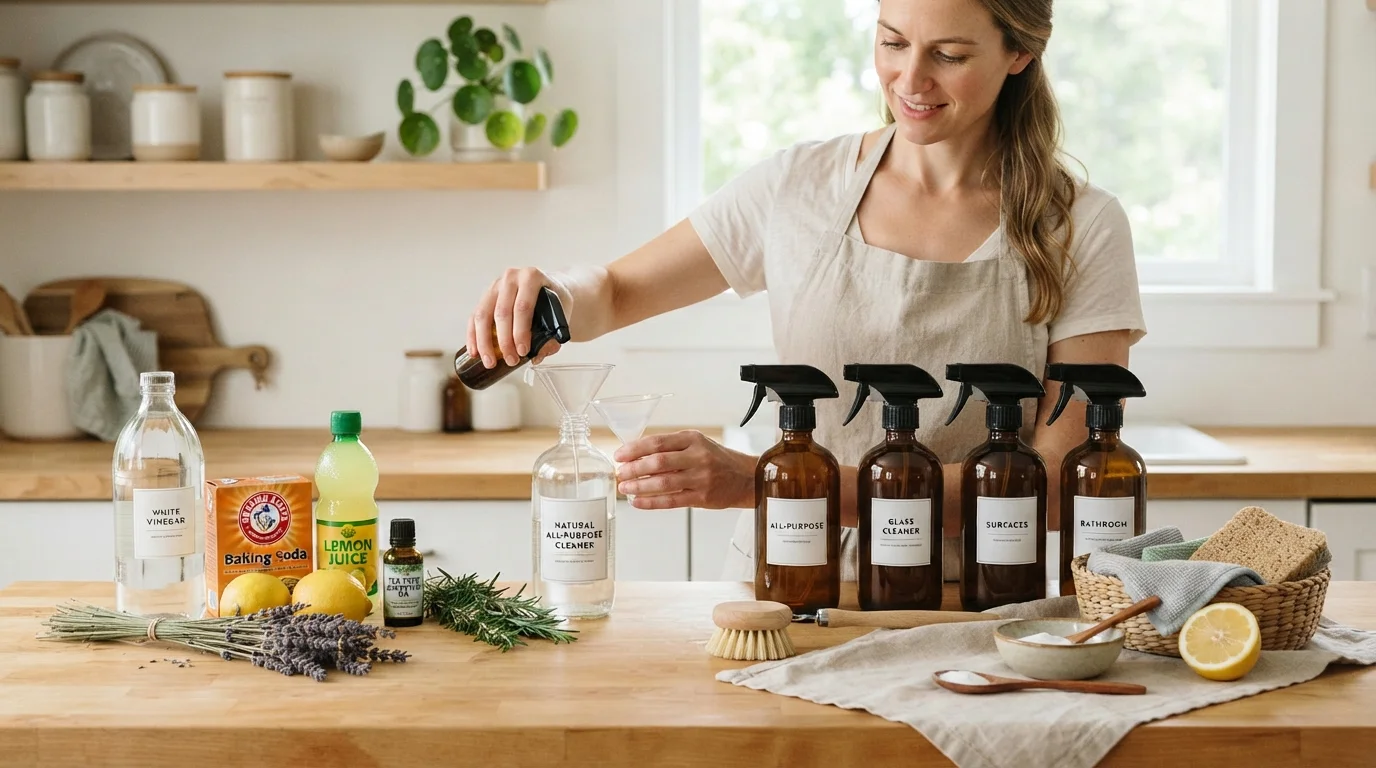
You really only need a handful of staples to handle almost any mess. Here’s your starter kit:
- White vinegar: Cuts grease, dissolves mineral deposits, and kills bacteria.
- Baking soda: A gentle abrasive that deodorizes and scrubs without scratching.
- Liquid castile soap: A plant-based soap that handles grime and works as a base for multi-purpose sprays.
- Essential oils: Tea tree, lavender, and lemon add antibacterial properties and a fresh scent.
Combine these in different ratios, and you can clean glass, tile, wood, and fabric. For more clever solutions, browse our green cleaning hacks for everyday stains.
DIY All-Purpose Cleaner Recipe
This is the workhorse of any chemical-free home. It takes 30 seconds to mix and handles countertops, sinks, stovetops, and even windows when used with a microfiber cloth.
Ingredients:
- 1 cup of water
- 1 cup of white vinegar
- 10-15 drops of tea tree or lemon essential oil
Instructions: Pour everything into a spray bottle. Shake gently. That’s it. Label it clearly so no one thinks it’s cooking oil.
For tough grease buildup, add a tablespoon of castile soap. Just remember: never mix vinegar with bleach or hydrogen peroxide. It creates toxic fumes.
How to Clean Your Kitchen Naturally
The kitchen sees the most grime—food splatters, sticky counters, and cutting boards that can harbor bacteria. But how to clean your home naturally in this zone is surprisingly simple.
Countertops: Spray with the DIY all-purpose cleaner. Let it sit for 30 seconds before wiping. For granite or marble, skip the vinegar (it can etch the stone) and use a mix of water, rubbing alcohol, and a drop of castile soap instead.
Cutting boards: Sprinkle baking soda over the board. Spray with vinegar until it fizzes. Let it sit for 5 minutes, then scrub with half a lemon. This removes odors and kills germs naturally.
Microwave: Place a bowl of water with a few lemon slices inside. Run for 3 minutes. The steam loosens dried-on food, and the lemon deodorizes the interior. Wipe clean with a cloth.
For more deep-cleaning strategies, check out our house cleaning tips for stubborn kitchen grease.
| Surface | Natural Cleaner | How to Use |
|---|---|---|
| Glass & Mirrors | 1:1 vinegar + water | Spray on, wipe with newspaper or microfiber cloth for streak-free shine. |
| Tile & Grout | Baking soda paste + vinegar | Scrub with an old toothbrush, let fizz, rinse. |
| Wood Floors | Water + mild castile soap | Mop lightly; avoid soaking the wood. |
| Stainless Steel | Olive oil + vinegar (spritz) | Apply with a soft cloth to polish and remove fingerprints. |
Bathroom: No More Harsh Fumes
Bathrooms need disinfecting, but you don’t need bleach to get the job done. White vinegar and hydrogen peroxide are both excellent natural disinfectants.
Toilet bowl: Pour in 1 cup of baking soda and 1 cup of vinegar. Let it bubble for 10 minutes. Scrub with a toilet brush and flush. The fizzing action lifts stains without scratching.
Shower doors: Wipe down with a vinegar-water spray after each shower to prevent hard water spots. For existing buildup, dip a sponge in baking soda and scrub gently.
Pro tip: Keep a small spray bottle in the bathroom for a quick daily spritz. It prevents soap scum from hardening, making your weekly clean faster.
Living Areas and Bedrooms
Dust, pet dander, and mystery odors are the main challenges here. Start by dusting with a slightly damp microfiber cloth—dry cloths just push dust into the air.
Freshen carpets: Sprinkle baking soda all over the carpet. Let it sit for 15 minutes (or overnight for strong odors). Vacuum thoroughly. You can add 10 drops of lavender essential oil to the baking soda for a calming scent.
Upholstery: Mix 1 tablespoon of liquid castile soap with 2 cups of warm water. Dip a cloth, wring it well, and blot stains. Avoid soaking the fabric to prevent mildew.
For general clutter control that makes cleaning easier, take a look at our organization and decluttering tips to keep surfaces clear.
Outdoor and Garden Areas
Natural cleaning extends beyond your front door. Patio furniture, garden tools, and grills all benefit from non-toxic cleaning methods.
Grill grates: Make a paste of baking soda and water. Apply to warm (not hot) grates. Let it sit for 15 minutes, then scrub with a stiff brush. Rinse with water.
Garden tools: Wipe metal blades with a cloth dipped in vinegar to prevent rust. Rinse and dry completely before storing.
Looking for more outdoor cleaning solutions? Browse our garden maintenance guide for eco-friendly pest control and patio care.
For a broader perspective on natural living, you might also find value in this resource on holistic home wellness.
Frequently Asked Questions
Is vinegar safe for all surfaces?
No. Avoid vinegar on marble, granite, hardwood floors, and rubber seals. It can corrode or etch these surfaces over time.
Does natural cleaning actually kill germs?
Yes. White vinegar kills many bacteria and viruses, including E. coli and salmonella. For stronger disinfection, use 3% hydrogen peroxide in a separate spray bottle.
How long do homemade cleaners last?
An all-purpose vinegar spray lasts about 1-2 months. If you add essential oils with antibacterial properties, it can last longer. Always store in a cool, dark place.
Can I use essential oils if I have pets?
Some essential oils (like tea tree and eucalyptus) are toxic to cats and dogs if ingested or inhaled in high concentrations. Use them sparingly, or stick to pet-safe options like lavender and chamomile.
Do natural cleaners work on laundry stains?
Absolutely. Baking soda boosts detergent power. Hydrogen peroxide works wonders on blood and wine stains. Just test on a hidden area first.
What’s the best way to deodorize my fridge?
Place an open box of baking soda on a shelf. Replace it every 3 months. You can also wipe shelves with a vinegar-water solution.
Is it cheaper to make natural cleaners?
Yes. A bottle of DIY all-purpose cleaner costs roughly $0.20, compared to $3-5 for a commercial brand. Over a year, the savings add up significantly.
Conclusion: A Cleaner Home, a Clearer Conscience
Switching to natural cleaning isn’t about perfection. It’s about making small, intentional swaps that add up to a healthier home.
Start with one recipe—like the DIY all-purpose cleaner—and see how it feels. You’ll probably notice your skin doesn’t feel dry after cleaning. The air smells cleaner. And you’ll wonder why you ever bought those chemical sprays in the first place.
Once you master how to clean your home naturally, there’s no going back. Your home will sparkle without the side of toxins. And that’s a goal worth scrubbing for.


