Cleaning Hacks Using Products You Already Own
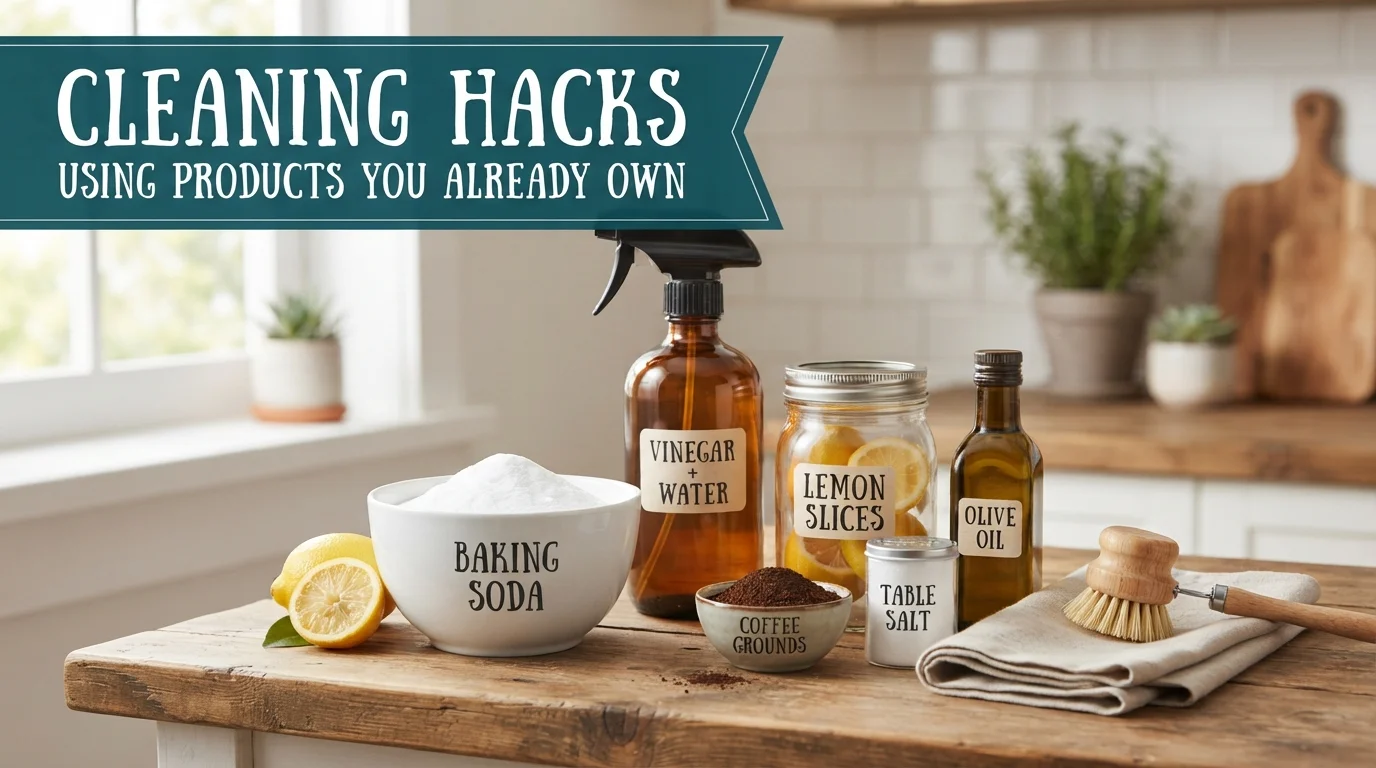
You don’t need a cabinet full of expensive, chemical-laden sprays to get a spotless home. In fact, some of the most effective cleaning hacks using products you already own are sitting in your pantry, bathroom, or garage right now. Whether you’re tackling stubborn stains, cutting through grease, or freshening up your space, these common household items can work wonders.
This guide will walk you through practical, money-saving strategies that turn everyday staples into powerful cleaning tools. From white vinegar to old newspaper, you’ll learn how to clean smarter, not harder. For even more inspiration, check out our collection of cleaning hacks that transform your routine.
Why Use Products You Already Own?
Using what you have on hand isn’t just about saving a few bucks. It’s also about reducing waste, avoiding harsh chemicals by leaning on eco-friendly cleaning solutions, and being prepared for messes at a moment’s notice. Many common products like baking soda, lemon, and rubbing alcohol are surprisingly versatile.
When you rely on DIY cleaning solutions, you also gain control over what touches your surfaces. No more mystery ingredients. Plus, these methods are often gentler on your furniture, countertops, and fabrics compared to commercial degreasers or bleach-based cleaners.
White Vinegar: The All-Purpose Champion
White vinegar is a powerhouse for home cleaning shortcuts. Its acidity cuts through soap scum, hard water deposits, and grease with ease. Mix equal parts vinegar and water in a spray bottle for an instant glass and mirror cleaner.
For a deeper clean, pour undiluted vinegar into your coffee maker reservoir and run a cycle. Follow up with two cycles of plain water to rinse. This removes mineral buildup and improves your coffee’s taste. It’s a perfect example of cleaning hacks using products you already own that are both cheap and effective.
Don’t worry about the smell—it fades quickly once dry.
Baking Soda: The Gentle Scrubber
Baking soda is your go-to for deodorizing and scrubbing without scratching. Sprinkle it on a damp sponge to clean sinks, tubs, and stainless steel. It lifts grime naturally and leaves surfaces polished.
Here’s a quick list of how baking soda saves the day:
- Oven cleaner: Make a paste with water, spread on baked-on grease, let sit overnight, then wipe away.
- Fridge deodorizer: Place an open box in the back to absorb odors for months.
- Carpet stain remover: Blot spills, sprinkle baking soda, let dry, then vacuum.
- Drain freshener: Pour half a cup down the drain, followed by hot vinegar. Wait 15 minutes, then flush with boiling water.
These natural cleaning tips are safe for kids and pets, making them ideal for family homes.
Lemon Juice: Natural Bleach and Degreaser
Lemon juice is a mild acid that brightens, cuts grease, and leaves a fresh scent. Rub half a lemon on cutting boards to remove stains and kill bacteria. For microwave cleaning, squeeze lemon juice into a bowl of water and microwave for three minutes. The steam loosens stuck-on food, and you can wipe it clean in seconds.
Combine lemon juice with salt to create a paste for scrubbing copper pots or brass fixtures. It restores shine without toxic fumes. These budget-friendly cleaning methods prove you don’t need specialized products for a radiant kitchen.
Dryer Sheets: Not Just for Laundry
Dryer sheets have surprising uses around the house. Use a used dryer sheet to dust baseboards and blinds—the anti-static properties repel future dust. You can also place one in the bottom of your trash can to control odors.
Another trick: rub a dryer sheet over a stuck zipper or soap scum on shower doors. The lubricating effect helps things move smoothly. Just remember that heavily scented sheets might not be ideal for all surfaces, so test a small area first.
Toothpaste: The Crafty Stain Remover
Whitening toothpaste (not gel) works as a mild abrasive for small marks. Dab a bit on a cloth to buff scuffs off white walls, sneakers, or even phone screens. For water rings on wood furniture, mix toothpaste with baking soda and gently rub in circles.
This is one of those cleaning hacks using products you already own that feels almost magical. It’s also a great way to repurpose a tube that’s nearly empty.
For more ideas on keeping your living spaces tidy, check out our guide on organization and decluttering to pair with these cleaning tricks.
Comparison Table: Common Products vs. Store-Bought Cleaners
| Product | DIY Use | Replaces |
|---|---|---|
| White Vinegar | Glass cleaner, coffee maker descaling | Windex, descaling solutions |
| Baking Soda | Scrub paste, carpet deodorizer | Abrasive powders, spray deodorizers |
| Lemon Juice | Cutting board sanitizer, microwave cleaner | Antibacterial sprays, chlorinated cleaners |
| Dryer Sheets | Dusting, odor control, lubricant | Dusting sprays, air fresheners |
| Toothpaste | Scuff removal, water ring repair | Specialized polishing compounds |
This table shows how simple swaps save money and reduce chemical exposure in your home. For more DIY cleaning solutions that fit your routine, explore our house cleaning tips section.
Frequently Asked Questions
Are these natural cleaning methods safe for all surfaces?
Most are safe for ceramic, glass, and stainless steel. Avoid vinegar on natural stone like granite or marble, as the acid can etch the surface. Always test a small hidden area first.
Can I use these hacks for deep cleaning?
Absolutely. Baking soda and vinegar tackle tough grime and odors. For heavy grease, let baking soda paste sit longer, or combine vinegar with dish soap for extra power.
How long do DIY cleaning solutions last?
Vinegar and water mixtures stay effective for about a month if stored in a sealed bottle. Baking soda paste should be used fresh. Lemon juice mixtures should be used within a week.
Will vinegar or lemon juice damage my appliances?
They are safe for most appliances like coffee makers and dishwashers when used correctly. Avoid prolonged exposure on rubber seals or aluminum parts.
Can I mix different products together?
Never mix vinegar with bleach or hydrogen peroxide, as this creates toxic fumes. Stick to simple combinations like vinegar and baking soda or lemon and salt.
Are these hacks better for the environment than store-bought cleaners?
Yes. Most DIY cleaners use biodegradable ingredients and reduce plastic waste from packaging. For more ideas, see our eco-friendly cleaning articles.
What is the best way to store homemade cleaners?
Use glass or plastic spray bottles labeled with the contents and date. Keep them out of direct sunlight and away from children and pets.
Conclusion
Cleaning hacks using products you already own empower you to maintain a spotless home without spending a fortune or relying on harsh chemicals. From vinegar’s versatility to baking soda’s gentle grit, these everyday heroes are ready when you are.
Start small: try one or two hacks this week and see how they transform your routine. You’ll likely find yourself reaching for that bottle of vinegar instead of a pricy spray. And don’t forget to explore more garden maintenance tips for extending these principles outdoors. Happy cleaning!
For further reading on natural cleaning methods, experts at The Ultimate Household Cleaning Guide also emphasize the value of repurposing common pantry items for a healthier home environment.


