Top Cleaning Mistakes That Make Your Home Dirtier
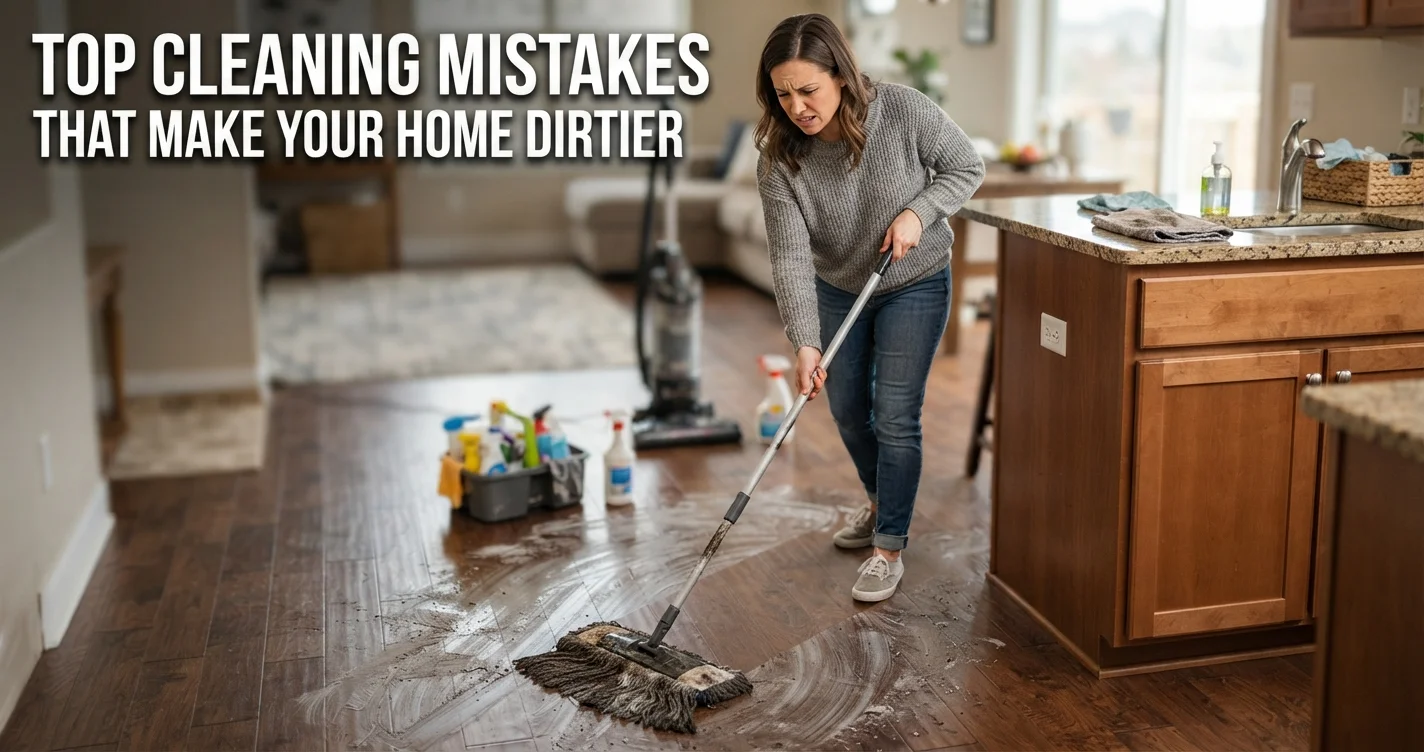
You vacuum, scrub, and wipe down every surface—yet somehow, your home still feels dusty or streaky. The frustrating truth is that many of us commit cleaning mistakes that make your home dirtier without even realizing it. A few small missteps can turn a thorough cleaning session into a spread-fest for grime and bacteria.
The good news? Once you identify these common cleaning errors, you can fix them fast. Below, I share the biggest offenders and how to swap bad habits for smarter, more effective techniques. For more quick wins, check out our home cleaning hacks section.
1. Using Too Much Cleaning Product
It seems logical: more soap means a cleaner surface, right? Wrong. When you overspray or pour too much cleaner, it leaves a sticky residue behind. That residue actually traps new dust and bacteria, making surfaces look dirtier faster.
Instead, read the label and use the recommended amount. For spray cleaners, a light mist is often enough. This tip applies to everything from kitchen counters to window cleaners. A little goes a long way toward avoiding cleaning mistakes that make your home dirtier.
2. Cleaning Your Vacuum Filter (or Forgetting It)
A dirty vacuum filter is a disaster for indoor air quality and floor cleanliness. If the filter is clogged, your machine simply blows fine dust back into the room. You might be pushing around a vacuum that is actually recirculating allergens.
Clean or replace your vacuum filter every 1–3 months, depending on usage. Tap it outside or rinse it if the manufacturer allows. This simple maintenance step is one of the most overlooked effective house cleaning tips you can adopt.
3. Wiping Surfaces with a Dirty Cloth or Sponge
You grab a cloth from under the sink, spray it with cleaner, and wipe the counter. But if that cloth was used last week for raw chicken juice or greasy stovetop spots, you’re just smearing bacteria around. The same goes for sponges that smell sour.
Always start with a clean, dry microfiber cloth for each cleaning session. Wash reusable cloths in hot water after use. For a deeper dive into non-toxic methods, explore our eco-friendly cleaning resources. Switching to fresh linens is a game-changer to prevent cleaning mistakes that make your home dirtier.
4. Spraying Cleaner Directly on Surfaces (Especially Mirrors)
Spraying directly on glass, mirrors, or wood creates runoff that drips down and hardens into streaks. You then have to wipe even harder, which often leaves lint or smudges. This is a classic example of common cleaning errors that waste time and product.
Instead, spray the cleaner onto your cloth, not the surface. This gives you more control and prevents oversaturation. For mirrors, use a squeegee for a professional finish.
5. Using Feather Dusters (They Just Move Dust)
That fluffy feather duster looks gentle, but it mostly pushes dust into the air. After a few minutes, the dust settles on the exact same shelves you just “cleaned.” It’s one of the most deceptive cleaning mistakes that make your home dirtier.
Use a damp microfiber cloth instead. The moisture traps dust particles so they don’t become airborne. If you love the convenience of a duster, invest in an electrostatic duster that attracts and holds dust.
6. Cleaning in the Wrong Order
Ever vacuumed a rug, then dusted a ceiling fan? That fan dust just fell all over your clean rug. Cleaning from top to bottom is a cardinal rule, yet many people ignore it. This sequencing mistake is one of the most frustrating cleaning routine mistakes.
Start high: dust ceiling fans, light fixtures, and top shelves. Work your way down to furniture, then floors. Finally, vacuum or mop. This logic prevents double work and keeps surfaces cleaner longer. See our house cleaning tips for more structured routines.
7. Neglecting to Let Cleaning Solutions Sit
Spray a bathroom cleaner on a soap scum ring and wipe immediately. What happens? The scum stays put. Many cleaning products need “dwell time”—30 seconds to a few minutes—to break down grime, grease, or mold.
Read the instructions. For tough spots, spray, step away for the recommended time, then wipe. This small patience pays off with less scrubbing and a truly clean surface.
| Mistake | Why It Backfires | The Fix |
|---|---|---|
| Overusing product | Leaves sticky residue that attracts dust | Use only the recommended amount |
| Dirty vacuum filter | Blows dust back into the room | Clean or replace filters regularly |
| Using dirty cloths | Spreads bacteria and grime | Start with a fresh microfiber cloth |
| Spraying directly on surfaces | Creates streaks and runoff | Spray onto cloth instead |
| Feather dusters | Just stirs up dust | Use damp microfiber cloth |
| Wrong cleaning order | Dust falls onto already cleaned areas | Clean top to bottom |
| Not letting product sit | Grime doesn’t dissolve | Wait for dwell time |
FAQ: Answers to Your Burning Cleaning Questions
1. Why does my glass cleaner leave streaks?
You probably sprayed directly on the glass. Mist the cleaner on a microfiber cloth, then wipe. Also, avoid cleaning windows on a hot, sunny day—the solution dries too fast.
2. How often should I replace my sponge?
Every 1–2 weeks. If it smells, toss it immediately. You can microwave a wet sponge for 1 minute to sanitize it, but replacement is safer for avoiding common cleaning errors.
3. Is it bad to use bleach on every surface?
Yes. Bleach is corrosive and can damage sealants, grout, and fabrics. Use it sparingly on non-porous surfaces only. For daily disinfection, a vinegar or hydrogen peroxide solution is often safer.
4. Should I dust or vacuum first?
Always dust first. Dust falls downward, so if you vacuum first, you’ll need to vacuum again after dusting. Follow the “top to bottom” rule.
5. Can I use fabric softener on microfiber cloths?
No! Fabric softener clogs the fibers in microfiber, making them less effective at trapping dust and bacteria. Wash microfiber cloths separately without softener.
6. Why does my wood furniture look cloudy after cleaning?
You likely used a silicone-based polish or too much water. Stick to a wood-specific cleaner and apply with a dry cloth. Over time, buildup from improper products is one of the cleaning mistakes that make your home dirtier.
7. How do I clean an area rug without pushing dirt deeper?
Vacuum in multiple directions. Start with a slow pass, then go perpendicular. For deep cleaning, consider professional steam cleaning once a year.
8. Are natural cleaners like vinegar always safe?
Vinegar is acidic and can damage natural stone (granite, marble) and wood finishes. Use it on glass, tile, and metal. For stone, use a pH-neutral cleaner. As always, spot-test first.
Conclusion
Avoiding these cleaning mistakes that make your home dirtier can transform your routine from frustrating to satisfying. Small changes—like using fresh cloths, letting cleaners sit, and following the right order—make a massive difference in how your home looks and feels.
For even more inspiration on maintaining a tidy space, browse our organization and decluttering guides. Remember: cleaning smarter, not harder, is the secret to a truly fresh home. Ready to put these home cleaning hacks into action? Your dust-free, streak-free future starts today.
As a reference for overall home maintenance best practices, you can check this trusted resource for additional household care insights.


