How to Maintain a Spotless Home the Eco-Friendly Way
Keeping a spotless home doesn’t have to come at the expense of the planet or your health. Many commercial cleaners contain harsh chemicals that linger in the air and on surfaces. Switching to an eco-friendly home cleaning routine is easier than you think, and it often works just as well—if not better.
Whether you’re a seasoned green cleaner or just starting out, this guide walks you through practical steps to maintain a spotless home the eco-friendly way. You’ll learn which ingredients to stock, which habits to build, and how to avoid common pitfalls.
Why Go Green with Your Cleaning Routine?
Conventional cleaning products often contain ammonia, bleach, and phthalates. These can irritate your skin, lungs, and eyes. They also wash into waterways, harming aquatic life. Choosing natural cleaning products reduces your family’s exposure to toxins and lowers your environmental footprint. It’s a simple shift that pays off in indoor air quality and peace of mind.
Plus, many eco-friendly solutions use ingredients you probably already have in your pantry. That means fewer trips to the store and less plastic waste. Over time, you’ll save money without sacrificing a single streak-free mirror.
Build Your Green Cleaning Toolkit
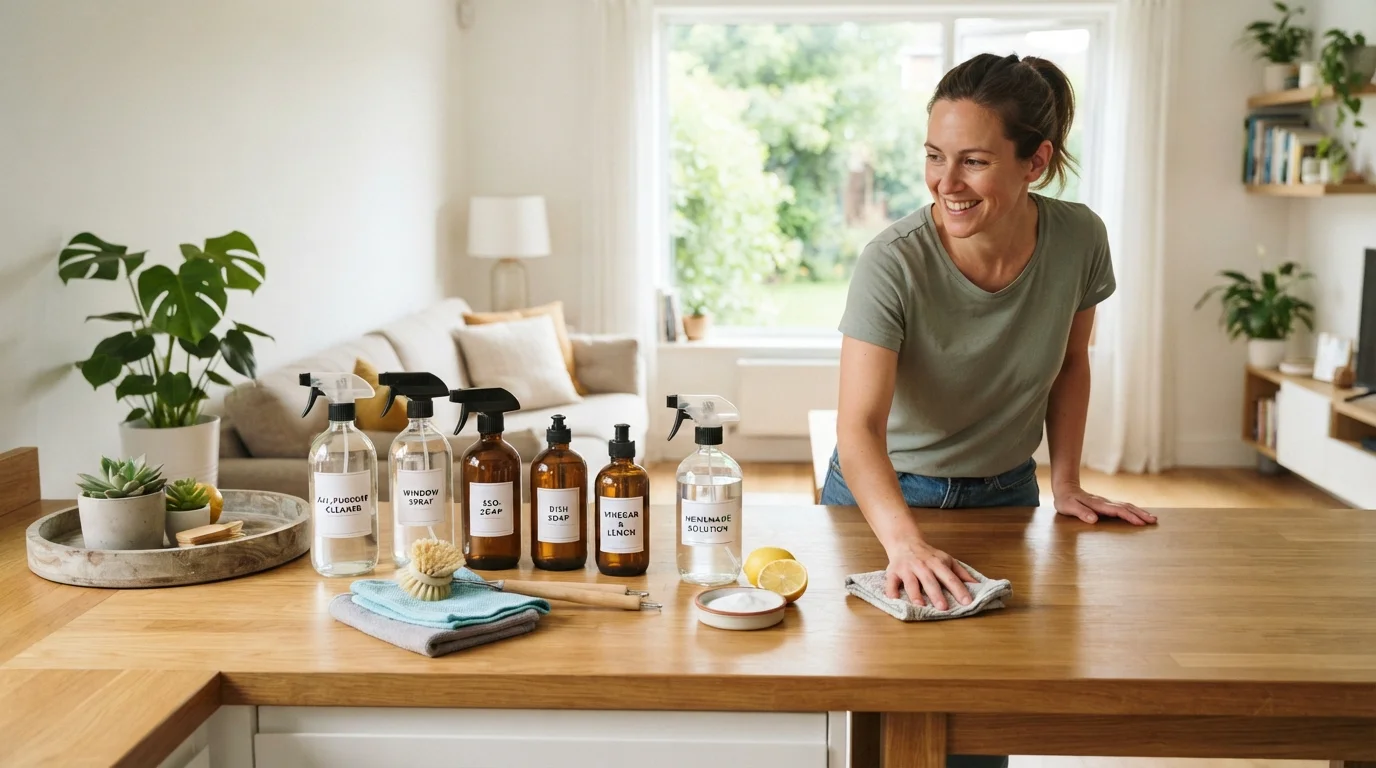
You don’t need a dozen specialized bottles. Start with these core items:
- White vinegar – cuts grease, removes odors, and disinfects.
- Baking soda – gentle abrasive for scrubbing sinks, tubs, and ovens.
- Castile soap – plant-based liquid soap for floors and counters.
- Lemon juice – natural bleach for cutting boards and stains.
- Microfiber cloths – reusable and trap dust without chemicals.
- Spray bottles – repurpose old ones for your homemade mixes.
With just these six items, you can make an all-purpose cleaner, a glass cleaner, and a scrubbing paste. Keep them under the sink and you’re ready for any mess. For more clever shortcuts, explore our cleaning hacks section packed with time-saving tricks.
Simple Homemade Cleaning Solutions That Work
Mixing your own cleaners is fast and foolproof. Here’s a table with the three most useful recipes:
| Recipe | Ingredients | Best For |
|---|---|---|
| All-Purpose Cleaner | 1 cup water + 1 cup white vinegar + 10 drops lemon essential oil | Kitchen counters, tables, bathroom surfaces |
| Glass & Mirror Spray | 1 cup water + 1 cup rubbing alcohol + 1 tablespoon vinegar | Windows, mirrors, stainless steel |
| Scrubbing Paste | ½ cup baking soda + 2-3 tablespoons Castile soap | Stovetops, tubs, sink stains |
Always label your bottles clearly and test a small area first. These homemade cleaning solutions are safe for most surfaces but avoid vinegar on natural stone like granite or marble.
Establish a Sustainable Cleaning Routine
Consistency is the secret to a spotless home. A sustainable cleaning routine doesn’t mean cleaning every day—it means cleaning smart. Break your tasks into daily, weekly, and monthly batches.
Daily: wipe kitchen counters, do a quick floor sweep, and make the bed. Weekly: vacuum all rooms, mop hard floors, and clean bathrooms. Monthly: wash windows, deep-clean the oven, and declutter one area. By spreading tasks out, you avoid burnout and keep your home fresh with less effort.
For seasonal deep cleans, check out our house cleaning tips that go beyond the basics.
Reduce Waste While Cleaning
Paper towels are convenient, but they create mountains of landfill waste. Switch to washable microfiber cloths, old cotton t-shirts cut into rags, or Swedish dishcloths. You can toss them in the laundry after each use.
Also, refill your spray bottles instead of buying new ones. Many bulk stores now sell vinegar and Castile soap in refill stations. This small habit keeps plastic out of the ocean and saves you money in the long run. According to a study referenced by eco-living experts, switching to reusable cleaning cloths can cut household waste by up to 30% annually.
Garden and Outdoor Green Cleaning
Your outdoor spaces deserve eco-friendly attention too. Use a simple vinegar-and-water solution to clean patio furniture and garden tools. Avoid chemical weed killers—instead, pour boiling water or use a baking soda sprinkle on cracks.
You can even make your own compost from kitchen scraps and use it as a natural fertilizer around flower beds. For more inspiration on keeping your yard pristine without synthetic chemicals, take a look at our garden maintenance guides.
Involve the Whole Family
Green cleaning works best when everyone pitches in. Give kids safe tasks like spraying a vinegar solution on windows or dusting with a microfiber cloth. Explain why you’re avoiding bleach and harsh chemicals. When the whole family understands the “why,” they’re more likely to stick with the routine.
You can also make it fun—turn on music, set a timer for 15 minutes, and see who can tidy their area fastest. Consistent habits built together last longer than any solo effort.
FAQ: Eco-Friendly Home Cleaning
1. Is vinegar really a disinfectant?
Vinegar kills some bacteria and mold, but it’s not as strong as bleach. For general day-to-day cleaning, it works well. For serious germs (like after raw chicken), use a diluted hydrogen peroxide spray or a hydrogen peroxide-based commercial product.
2. Can I use baking soda on all surfaces?
Baking soda is gentle, but it can scratch polished surfaces like acrylic or glass if rubbed too hard. Always test on a hidden area first. It’s excellent for stainless steel, ceramic, and porcelain.
3. How do I store homemade cleaning solutions?
Keep them in glass or BPA-free plastic spray bottles. Label everything clearly. Most homemade cleaners stay effective for up to two weeks. If you add essential oils, they may last a month.
4. Is eco-friendly cleaning more expensive?
No—it’s usually cheaper. A bottle of vinegar costs under a dollar, and baking soda is just as affordable. Reusable cloths replace paper towels, so you save money over time. The initial investment of a few spray bottles pays off quickly.
5. What about essential oils?
Essential oils add natural fragrance and some have antibacterial properties. Tea tree, lavender, and lemon are popular choices. Use high-quality, pure oils and start with just a few drops per spray bottle.
6. Can I clean my wood floors with vinegar?
Vinegar is too acidic for unsealed or waxed wood floors. It can strip the finish. Instead, use a few drops of Castile soap mixed with water. Always check your floor manufacturer’s recommendations.
7. How do I get rid of tough stains without chemicals?
For coffee or tea stains on cups, rub with baking soda and a damp cloth. For carpet stains, blot with club soda or a baking soda paste. Let it sit for 15 minutes, then blot again.
8. Do I need to throw away all my old cleaners?
No, finish them first to avoid waste. Once empty, rinse the bottles and repurpose them for your homemade solutions. This way, you transition gradually without creating extra garbage.
Conclusion
Learning how to maintain a spotless home the eco-friendly way isn’t complicated—it’s about swapping habits, not sacrificing results. With a few natural ingredients, reusable tools, and a consistent routine, you can enjoy a cleaner home and a healthier planet.
Start small: replace one commercial cleaner with a homemade version this week. Then add another. Before you know it, your entire cleaning cabinet will be free of harsh chemicals. And if you ever need more inspiration, drop by our organization and decluttering section to keep your space tidy and toxin-free.
Your home, your health, and the Earth will thank you.


