How to Make Your Own Eco-Friendly Cleaning Solutions
Have you ever looked at the ingredient list on the back of a commercial cleaner and felt a bit uneasy? You are not alone. Many store-bought products are packed with harsh chemicals that can irritate your skin and fill your home with fumes.
Making the switch to eco-friendly cleaning solutions is easier than you think. With just a few basic pantry staples, you can whip up powerful cleaners that leave your home sparkling and smelling fresh. Plus, you will save money and reduce plastic waste.
In this guide, I will share my favorite DIY cleaning recipes and tips. These are formulas I have tested over years of helping homeowners transition to a greener routine. Let us get started.
Why Choose Natural Home Cleaning Over Commercial Products?
Commercial cleaners often contain ammonia, chlorine bleach, and phthalates. These ingredients can trigger allergies and contribute to indoor air pollution. By switching to non-toxic household cleaners, you protect your family and the planet.
Natural ingredients like vinegar, baking soda, and lemon juice are surprisingly effective. They cut through grease, remove stains, and kill bacteria without leaving toxic residue. For deeper inspiration on reducing chemicals at home, explore our tips on eco-friendly cleaning for your entire household.
Another benefit is cost. A bottle of homemade all-purpose cleaner costs pennies to make. Over a year, the savings really add up.
The Essential Ingredients for DIY Cleaning Recipes
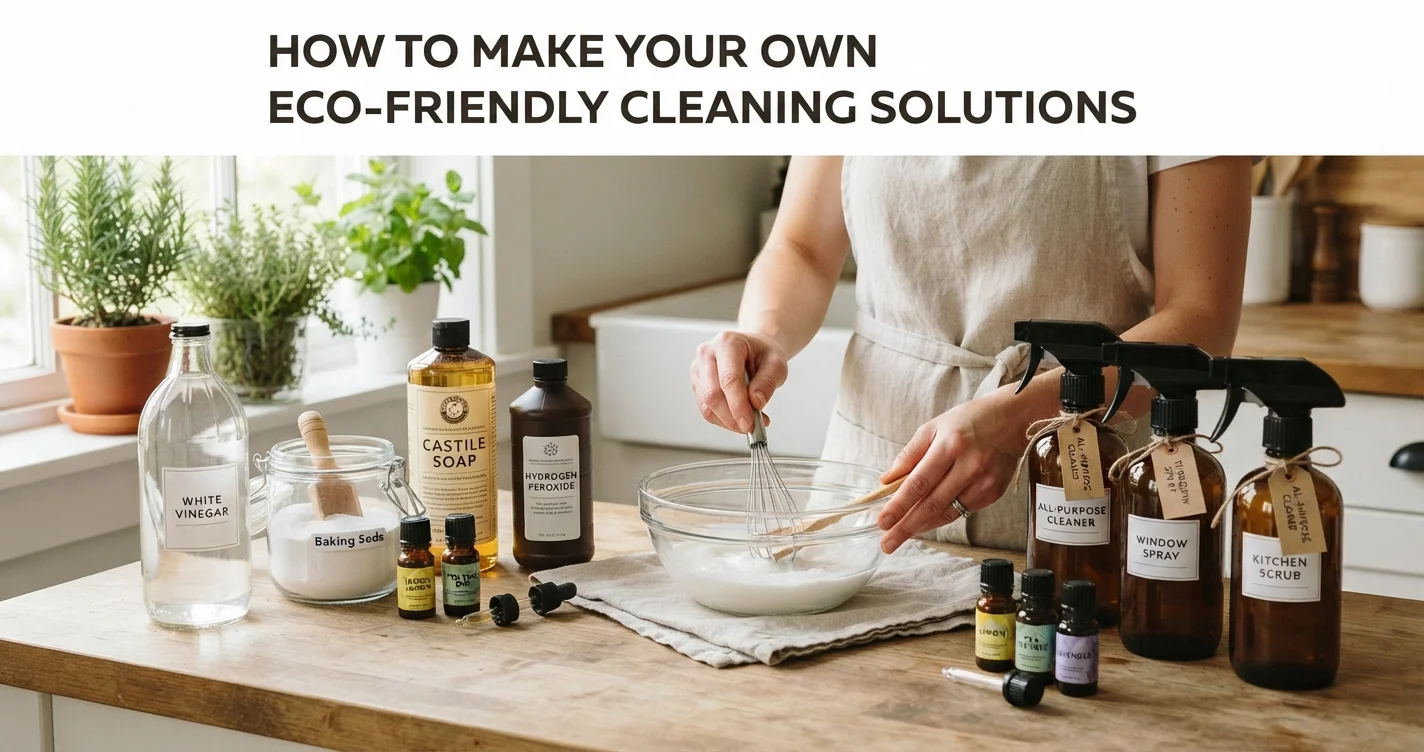
To start making your own eco-friendly cleaning solutions, you only need a handful of items. Most of them are probably in your kitchen right now.
- White vinegar: Cuts grease, neutralizes odors, and kills mold.
- Baking soda: A gentle abrasive that scrubs away grime.
- Lemon juice: Cuts through grease and leaves a fresh scent.
- Castile soap: A plant-based soap that works as a surfactant.
- Essential oils (optional): Tea tree, lavender, or lemon for antibacterial properties and fragrance.
Store these in glass spray bottles or jars. Avoid mixing vinegar with hydrogen peroxide or bleach, as that can create harmful fumes.
Recipe 1: All-Purpose Surface Cleaner
This is the workhorse of natural home cleaning. It works on countertops, tables, appliances, and most sealed surfaces.
Mix equal parts water and white vinegar in a spray bottle. If you dislike the vinegar smell, add 10 to 15 drops of lemon or tea tree essential oil. Shake well before each use.
Spray the surface lightly, let it sit for a minute, then wipe with a microfiber cloth. For tough sticky spots, let the solution soak a bit longer. This recipe is safe for granite and quartz as long as you do not let it pool for too long.
For more quick tips around the house, check out our cleaning hacks that save time and effort.
Recipe 2: Glass and Mirror Cleaner
Forget about store-bought window sprays. This DIY cleaning recipe leaves glass crystal clear without streaks.
Combine 1 cup of water, ½ cup of white vinegar, and 1 tablespoon of cornstarch in a spray bottle. Shake very well until the cornstarch dissolves. Use it just like a regular glass cleaner.
Spray onto a microfiber cloth first, not directly onto the glass, to avoid drips. Buff in a circular motion, then finish with a dry cloth. The cornstarch gently polishes away smudges.
This solution works wonderfully on windows, mirrors, and even stainless steel appliances.
Recipe 3: Gentle Tub and Tile Scrub
Bathrooms need a stronger scrub, but you do not need bleach. This paste handles soap scum and mildew without harsh chemicals.
Mix ½ cup of baking soda with 3 tablespoons of liquid Castile soap. Add enough water to form a thick paste. For extra cleaning power, add 5 drops of tea tree essential oil.
Apply the paste to a damp sponge and scrub your bathtub, shower tiles, and sink. Let it sit for 10 minutes, then rinse thoroughly. The baking soda provides gentle abrasion while the soap lifts grime.
If you maintain your bathroom regularly, you will notice how easy it stays clean. For more room-by-room strategies, browse our house cleaning tips for every corner of your home.
Recipe 4: All-Natural Floor Cleaner
Hardwood, tile, or laminate floors benefit from a gentle cleaner. This formula cleans without stripping the finish.
Fill a bucket with 1 gallon of warm water. Add ¼ cup of white vinegar and 1 tablespoon of liquid Castile soap. For a pleasant scent, add 10 drops of lavender essential oil.
Mop as usual, but avoid soaking the floor. Damp mop is better than wet mopping. For hardwood, make sure you wring the mop out well to prevent water damage.
This sustainable cleaning tip leaves your floors clean and shiny without sticky residues.
Table: Quick Comparison of Homemade Cleaners
| Cleaner Type | Key Ingredients | Best Used On | Shelf Life |
|---|---|---|---|
| All-Purpose | Vinegar, water | Counters, tables, appliances | 2–3 months |
| Glass Cleaner | Vinegar, cornstarch, water | Windows, mirrors, stainless steel | 1–2 months |
| Tub & Tile Scrub | Baking soda, Castile soap | Bathtubs, showers, sinks | Make fresh |
| Floor Cleaner | Vinegar, soap, water | Hardwood, tile, laminate | Use immediately |
Always label your bottles with the date and recipe. Keep them out of reach of children and pets, even though the ingredients are natural.
Tips for Storing and Using Your DIY Cleaners
Store your eco-friendly cleaning solutions in dark glass bottles if possible. Light can break down essential oils over time. If you use plastic, choose BPA-free containers.
Never mix vinegar-based cleaners with hydrogen peroxide or bleach. The combination can release toxic gas. Keep your recipes simple and stick to one formula per bottle.
Test any new cleaner on an inconspicuous area first, especially on natural stone or unsealed wood. While vinegar is safe for most surfaces, it can etch marble and limestone.
For a deeper dive into keeping your home in top shape, you might enjoy our collection of organization and decluttering strategies that complement your cleaning routine.
FAQ
Are eco-friendly cleaning solutions as effective as chemical ones?
Yes, for most everyday messes. Vinegar kills many bacteria, and baking soda scrubs well. For heavy grease or mold, you might need to let the solution sit longer or scrub a bit more. If you are dealing with tough stains, this external resource on deep cleaning techniques can offer additional guidance.
Can I use these cleaners on all surfaces?
Not on unsealed marble, granite, or cast iron. Always test first. Vinegar is acidic and can dull natural stone over time.
How long do homemade cleaners last?
Most last 1 to 3 months if stored in a cool, dark place. If you see cloudiness or a bad smell, make a fresh batch.
Do I need to use essential oils?
No, they are optional. They add scent and some have antibacterial properties, but vinegar alone works fine.
Is it safe to mix vinegar and baking soda?
It creates a fizzy reaction that is great for scrubbing drains or tough spots. However, once the fizz settles, the cleaning power is less than using them separately.
Can I disinfect with homemade cleaners?
Vinegar can kill some bacteria. For stronger disinfection, use 70% rubbing alcohol or hydrogen peroxide. Never mix them with vinegar.
Will these cleaners damage my septic system?
No, they are perfectly safe. In fact, they are better for septic systems than harsh chemical alternatives.
Conclusion
Making your own eco-friendly cleaning solutions is a small change that brings big rewards. You save money, reduce waste, and create a healthier home for your family. These recipes are simple enough to whip up in minutes.
Start with one or two recipes this week. Swap out your bathroom cleaner or all-purpose spray. Once you see how well they work, you will likely want to replace more products.
Remember, sustainable living does not happen overnight. Every little bottle you make yourself is a step in the right direction. Here is to a cleaner home and a happier planet.


